
When the Body Remembers: Emotional Release and Healing Through Embodied Presence
Our bodies quietly hold the imprint of what we have lived through, in tension, in held breath, in places we no longer quite feel. Emotional release is what happens when gentle, present attention lets that held experience begin to move and soften. In my work, it unfolds slowly, safely and without force.
There is an old wisdom, one the body has always known, that we do not only think our experiences but carry them. A difficult year settles into the shoulders. Grief tightens the chest. Something we were never able to say sits quietly in the throat, long after we have forgotten the words. The body remembers what the mind has tried to move past.
I see this often in my work. Someone arrives to lie down, expecting only to relax. Then, as the body softens, they find that something long held begins to stir. This is not a problem to be solved. It is the body doing what it has always wanted to do, which is to let go.

What does it mean to hold emotion in the body?
To hold emotion in the body means that feelings we could not fully express or process settle into physical form, as tension, tightness or numbness. They stay with us until something allows them to be felt and released.
When a feeling is too much or arrives at a time when we cannot afford to feel it, the body has a way of holding it for us. It is a kind of protection, a wise one. A clenched jaw, shallow breathing, a stomach that never quite unknots, these can be the body’s way of keeping something manageable until we are ready. The trouble is that ready rarely comes on its own. Years can pass, and the holding simply becomes the way we live.
Why does past experience stay stored in the body?
Because feeling often happens faster than thinking. The body registers and keeps an experience, especially an overwhelming one, before the mind has made sense of it, so the imprint can remain long after the event has passed.
Much of what we live through is felt before we understand it. The body takes it in through sensation, through the nervous system, through the subtle bracing we do without noticing. When there is no space to complete that response, to cry, rest and be comforted, the body holds the unfinished feeling in trust. It is not being difficult. It is patiently waiting for a moment safe enough to release.
How does gentle, present attention help emotion move?
When the body feels safe and truly attended to, its guarding can ease. Slow breath, unhurried touch and quiet presence signal that it is finally safe to feel, and what was held begins, softly, to move.
Release doesn’t come through effort or analysis but through safety. When the body is met with warmth and patience, with no demand to be anything other than it is, the nervous system begins to settle. The breath deepens. The muscles that have braced for so long start to soften and, as they do, the feeling they were holding is free to surface at last.
This is the quiet heart of the work I offer, whether in a tantric massage session or a slower practice of conscious intimacy. Whether through breath, through stillness or through slow and respectful touch, the aim is always the same, to create a space safe enough that the body no longer needs to hold on.
What might emotional release feel like?
It varies. Release can arrive as tears, a wave of warmth, trembling, a deep sigh or simply a sudden sense of lightness. It is rarely dramatic, and it always passes, leaving a feeling of more room inside.
People sometimes worry that letting go will mean being overwhelmed, but it is gentler than that. Emotion tends to move like weather, arriving, being felt and passing on, when it is allowed to. There may be tears, though not always. There may be a trembling in the limbs, a warmth spreading through the chest, a long breath that seems to reach somewhere it has not reached in years. Afterwards, most people describe a quietness, a sense of space where there had been holding and a new tenderness towards themselves.
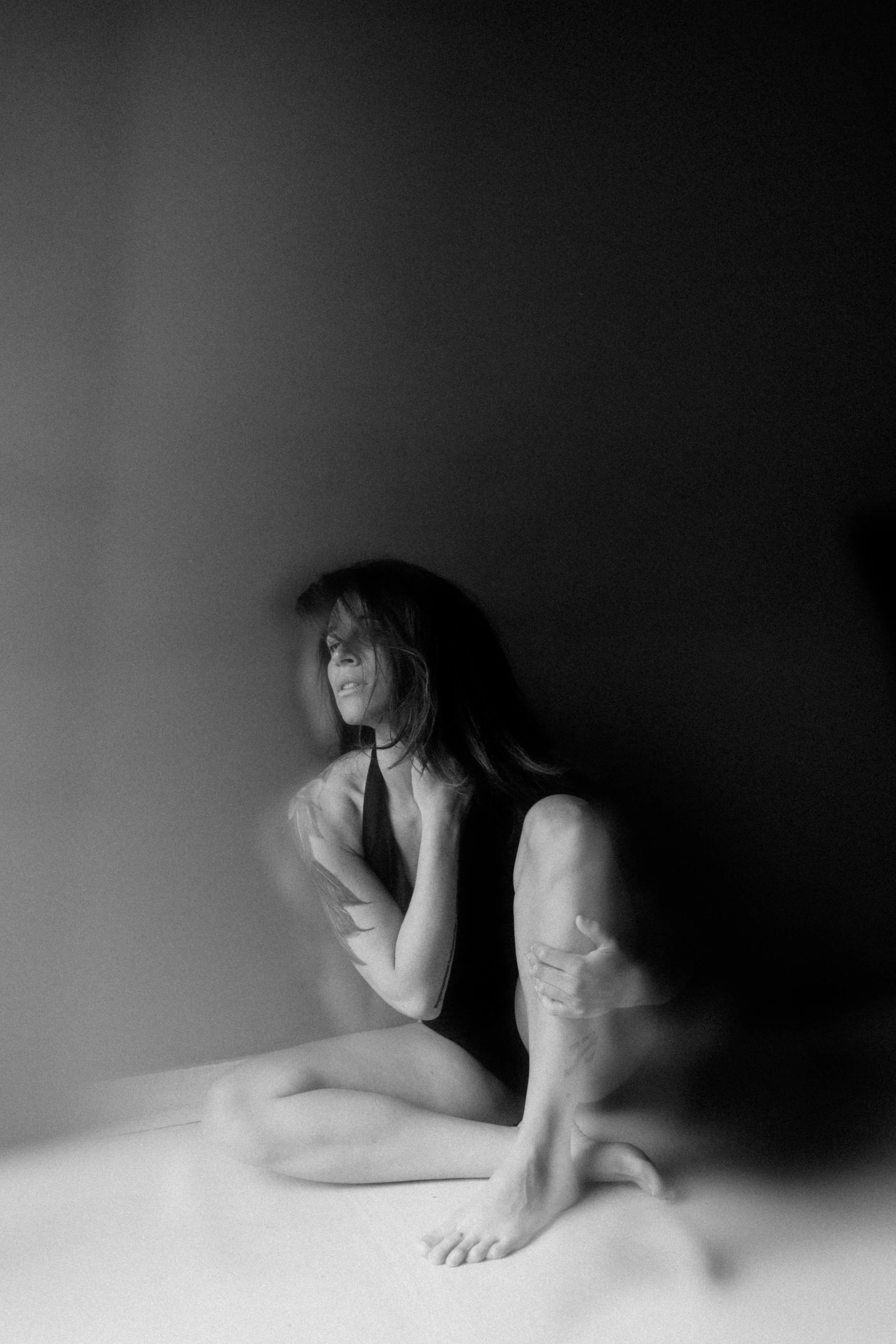
How can I reconnect with my body gently at home?
Start small and slow. A few minutes of quiet attention to the body, without trying to change anything, is enough to begin. The aim is not to force feeling but to let the body know it is safe to be felt.
Find somewhere private where you will not be disturbed, and let your body rest, sitting or lying down.
Take a few slow breaths, letting each one settle a little lower into the body.
Bring a soft, curious attention to how the body actually feels, noticing areas of tension, warmth or numbness without judgement.
If a feeling begins to rise, let it be there. You do not need to explain it or push it away.
Stay only as long as feels comfortable, and close by placing a hand where you feel most at ease, as a gesture of kindness to yourself.
If you would like a fuller breathing practice to begin with, my writing on conscious breathing is a gentle place to start.
If deeper or more painful feelings surface or if you are living with the effects of trauma, there is no need to move through it alone. This kind of gentle work can sit alongside the care of a therapist or another trusted professional, and there is real strength in reaching for support.
In closing
The body is not a problem to be fixed. It is a faithful keeper of everything we have lived, holding on until the moment it feels safe to set things down. When we meet it with patience and real presence, it knows. Slowly, gently, it begins to trust again, and in that trust something held for years can finally soften.
This, to me, is the quiet miracle at the centre of this embodied, somatic work, that healing is not something we force, but something we allow. It is the ground beneath every tantric massage session I offer in London, a slow and sacred remembering of all that the body has carried.
-
Yes. It is well understood that stress and strong emotion can show up physically, as tension, shallow breathing or discomfort that lingers. Gentle, embodied attention can help these ease.
-
Yes. It is quite common for feelings to surface when the body relaxes deeply. Tears, a sigh or a sense of lightness are natural and nothing to be embarrassed about.
-
No. You are welcome to share as much or as little as you wish. The body can release without any need to explain or relive the story behind a feeling.
-
No. This work can beautifully complement therapy, but it does not replace professional mental health care. If you are working through significant trauma, it is worth having a therapist’s support alongside it.
-
It can be. In neo-tantra and tantric massage the body is met with slowness, safety and presence, which is often exactly what allows held emotion to move. Everything unfolds gently and at your pace.
